
Ready for college. Who’s managing the week?
Getting into college and being ready to manage college are different things. Practical coaching helps students explore systems for planning, time management and growing independence.
Responsibilities grow. Support steps back.
Predictable high-school schedules, daily teacher contact and parents nearby can supply more structure than anyone realizes. College asks students to create more of it themselves.
Assignments, email, course platforms, appointments, work and long-term projects compete for attention. The issue may be managing the work—not understanding it.
A capable student can know what needs to happen and still find starting, prioritizing and following through difficult. Parents may end up sending reminders from miles away.

Practice now. Own more of the week.
Practice while support is still close.
Beyond applications and admissions, prepare for the everyday decisions college will ask the student to make.
- Plan a week without a parent managing it
- Track assignments, commitments and deadlines
- Use unstructured time intentionally
- Know when and how to ask for help
- Gradually transfer responsibility from parent to student
Build a better way to manage what is here.
A transition may expose challenges immediately, or a student may start strong and struggle as responsibilities accumulate.
- Start work before urgency takes over
- Break large assignments into manageable steps
- Keep track of deadlines, email and course platforms
- Recover when a week—or semester—starts going sideways
- Build routines and accountability that increasingly belong to the student
A syllabus. A shift. A plan Alex owns.
Start my history essay outline before my Thursday work shift
- Check the course syllabus and choose one reading.
- Agree on an 8:30 AM reminder and a three-point outline.
- When a closing shift changes the plan, Alex chooses a new time himself.
If the readings are unclear, he can ask his coach about a specific question for his professor. Reflection informs the next session—not automatic rescheduling or a promise of a finished essay.
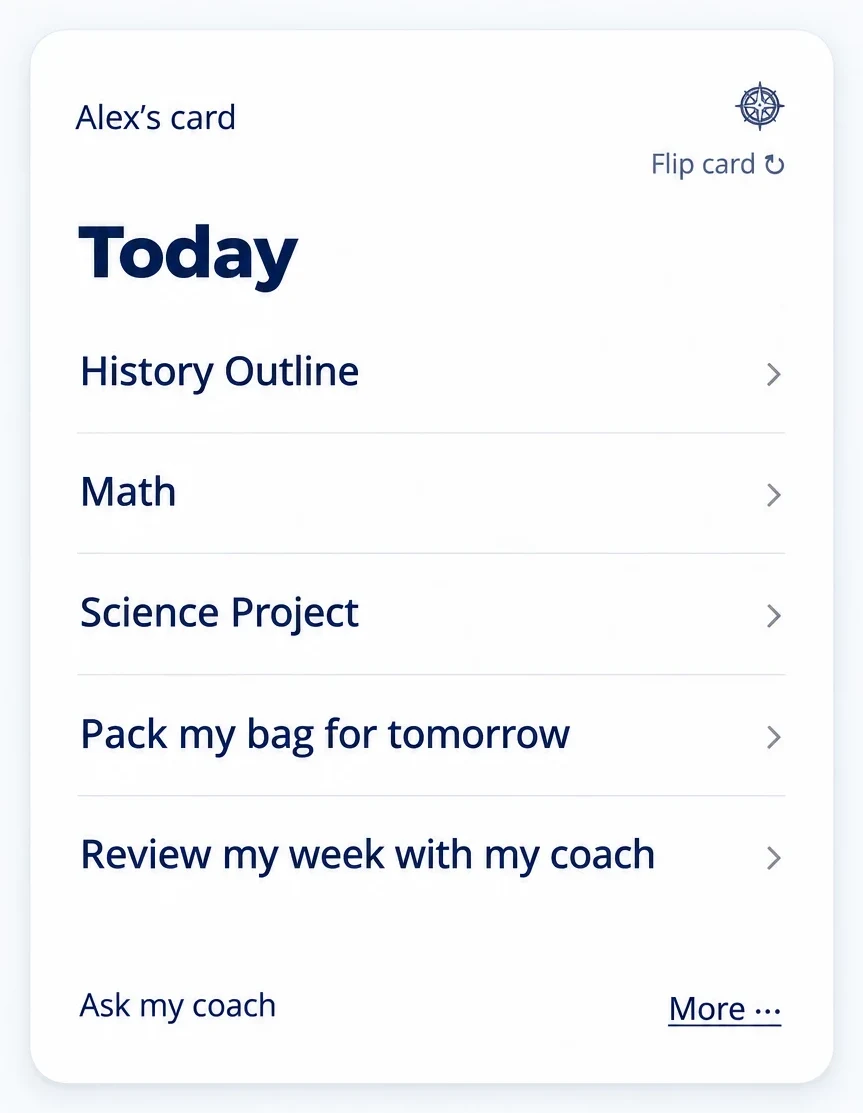
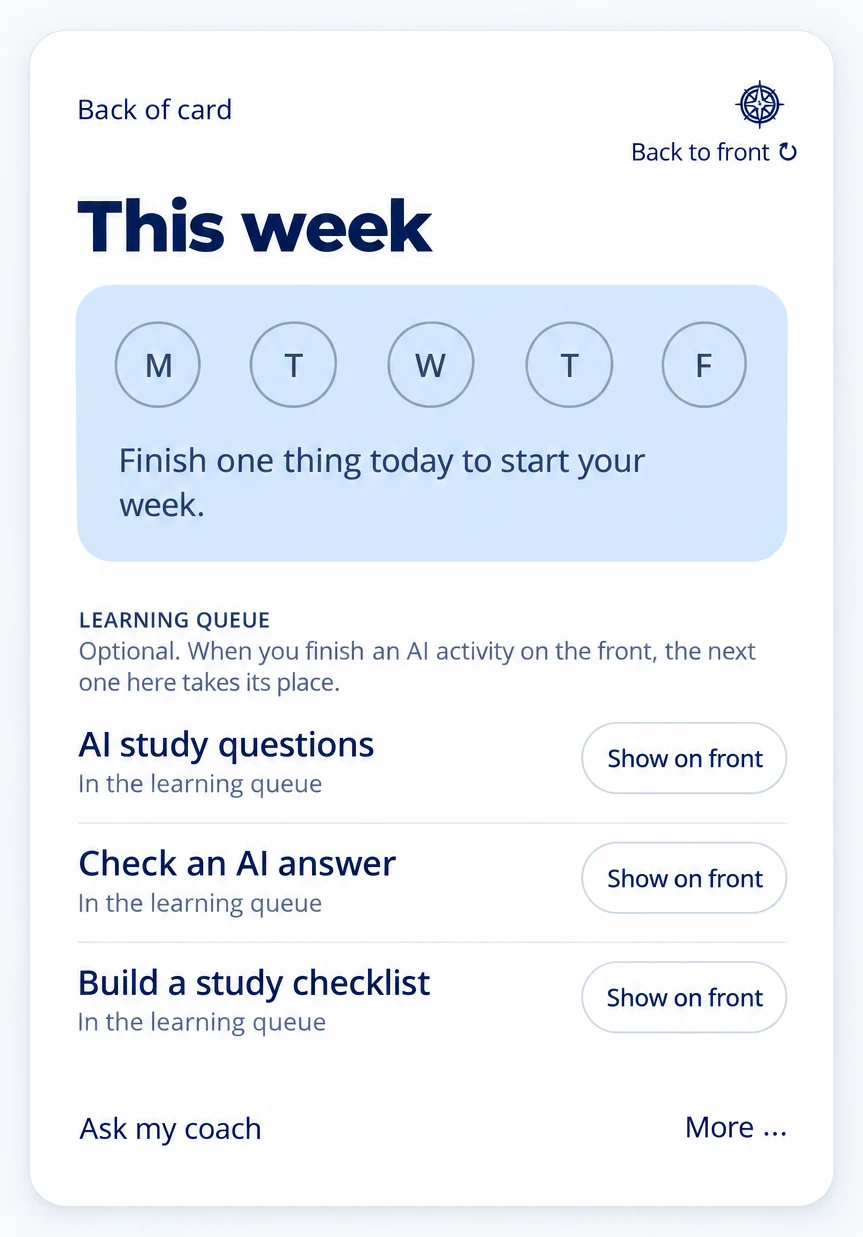
Showing the front of the card.
Your student’s plan—not another adult’s instructions.
If you’re the student reading this
This is not about hiring someone to tell you what to do or giving them access to your assignments. You and a coach work together on one achievable goal per 30-minute session, with strategies that fit your week.
The P.A.V.E. Companion mobile app keeps the goal and agreed steps close. You can capture where you left off and ask your human coach for help.
For parents
Coaching does not swap a parent’s reminders for a coach’s. The aim is a system the student increasingly owns. Parent visibility is limited to goals and agreed steps, not private conversations.
For students 18 or older, parent involvement and coaching updates are discussed with the student and shared with their permission.
More ownership. Not more oversight.
P.A.V.E. works on planning, organization, task initiation, prioritization, time management, accountability, follow-through and self-advocacy. It is not therapy, tutoring or academic advising, and does not replace campus accessibility services or do the student’s work.
Plan, Anchor, Value, Excel. The same six commitments shape college coaching, with the strategy adapted to the student’s circumstances.
Share P.A.V.E. with a family.
It doesn’t have to be this way. P.A.V.E. can help.
One free 30-minute conversation can help you decide whether you’ve found the support you’ve been looking for.
No pressure. Just a conversation about your student.