
Everyone has a plan for you. What about yours?
Maybe a parent arranged a meeting, and you’re wondering why you’re here. Fair question. This isn’t another adult piling on. We want to hear what matters to you—not give you a lecture.
Start with what you want.
Less last-minute stress? More time for something you care about? A way to start the thing you keep putting off? You don’t need the perfect answer. Your priorities are the starting point.
You and your coach make one achievable goal together. It’s yours—not a list of demands someone else hands you. Your coach helps you turn it into small, practical steps.
Your time matters.
Weekly sessions are 30 minutes. That time is for you and your human coach to talk, plan, and reflect on the real week—not another class or a lecture.
A person in your corner.

You work with a real human coach who brings experience and listens to your perspective. Sue Hobbs has more than 20 years in education and develops the standards our coaches use.
Coaching is practical support for planning, starting, managing time and following through. It isn’t therapy or medical care, and it doesn’t diagnose or treat conditions. We can’t promise a particular result.
Your goal. Your steps. Your pocket.
The P.A.V.E. Companion mobile app is purpose-built to support your weekly coaching—not replace your coach.
- One goal you and your coach agree on.
- Visual steps that keep the next action clear.
- Reminders you agree to—not a flood of extra demands.
- A way to contact your coach with a brief question between sessions.
Your coach won’t always be available right away. No instant reply is promised; longer conversations can move to a session.
Small enough to try. Yours to choose.
Start my history essay outline before my Thursday work shift
- Check what the syllabus asks for.
- Choose one reading and a reminder that fits.
- Try a three-point outline, then tell your coach what got in the way.
This is Jordan’s fictional example, not an assignment for you. Your goal starts with your priorities. A hard week gives you and your coach something useful to discuss.
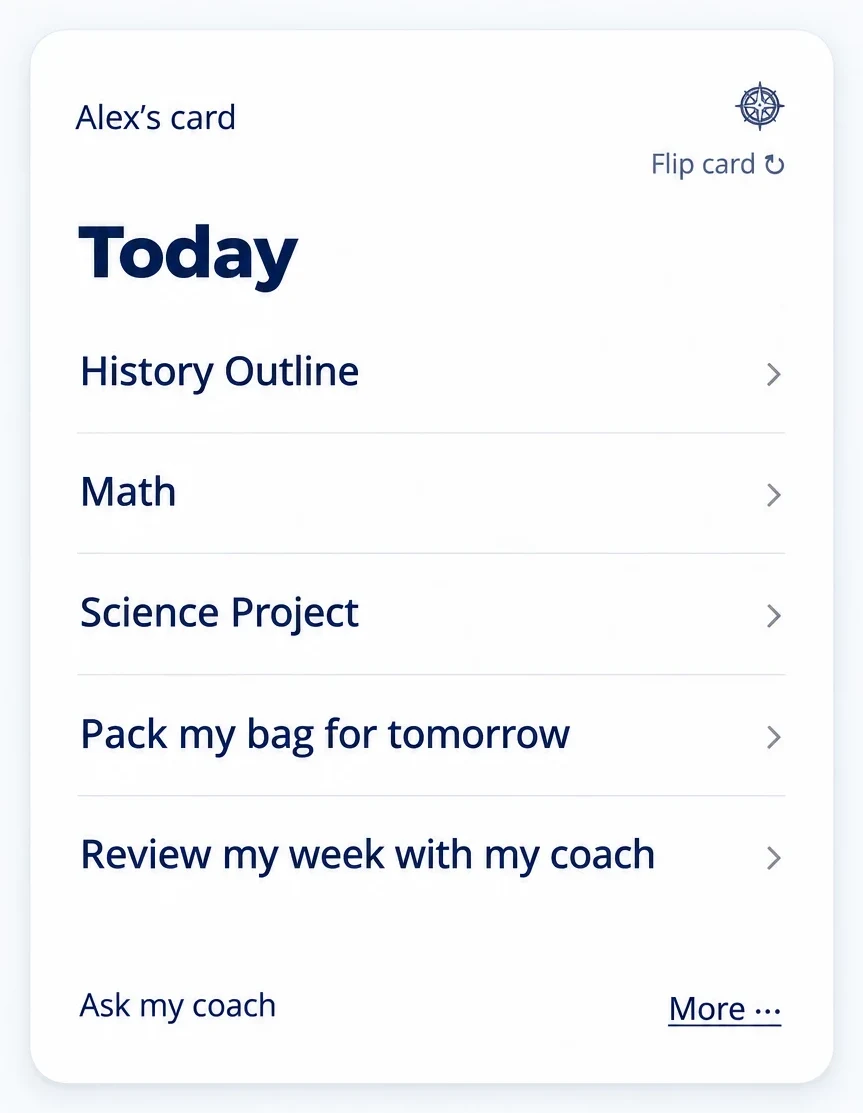
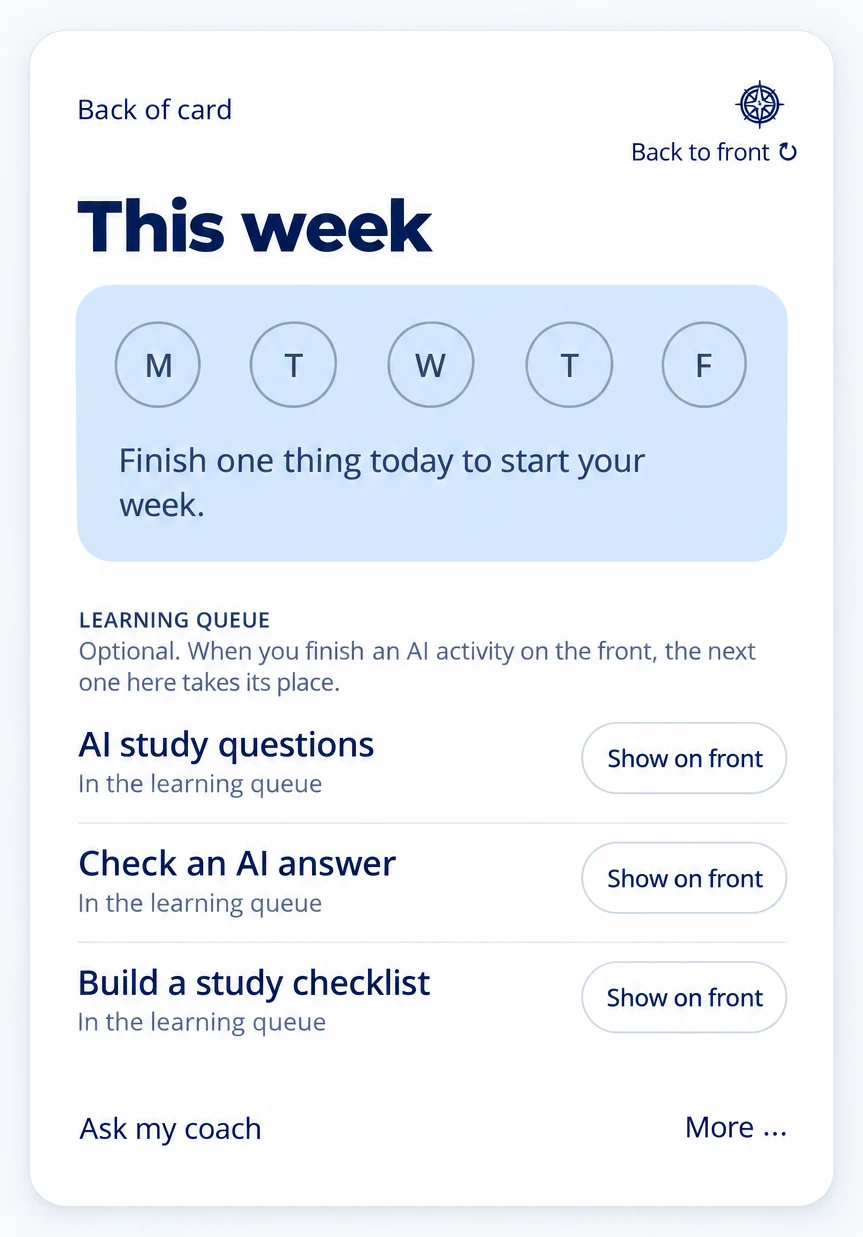
Showing the front of the card.
No perfect plan needed. Just your perspective.
First, we listen.
You can say what brought you here, what feels difficult, and what you’d like to be different. You can ask questions, too—including whether coaching feels right for you.
We talk about your priorities.
You don’t need to arrive with a finished plan. In coaching, you and your coach choose one achievable goal together and agree on steps that fit your week. A free discovery call is a conversation about fit, not a required coaching session.
We ask for an open mind and an honest try.
You don’t have to pretend everything is fine—or promise to be perfect. Tell your coach what works and what doesn’t, so you can adjust the strategy together.
Your support. Your privacy.
If you’re a teen
Parents see goals and agreed steps—not your private coach messages. They can understand the plan without reading your private conversations.
If you’re an adult college student
Sharing with a parent needs your consent. Parent access is not automatic; any agreed sharing is limited to goals and agreed steps, not private coach messages.
We’ve got your back.
You bring your perspective. We bring a human coach and practical support. Start with an open mind, ask your questions, and see whether this feels like a useful next step for you.